
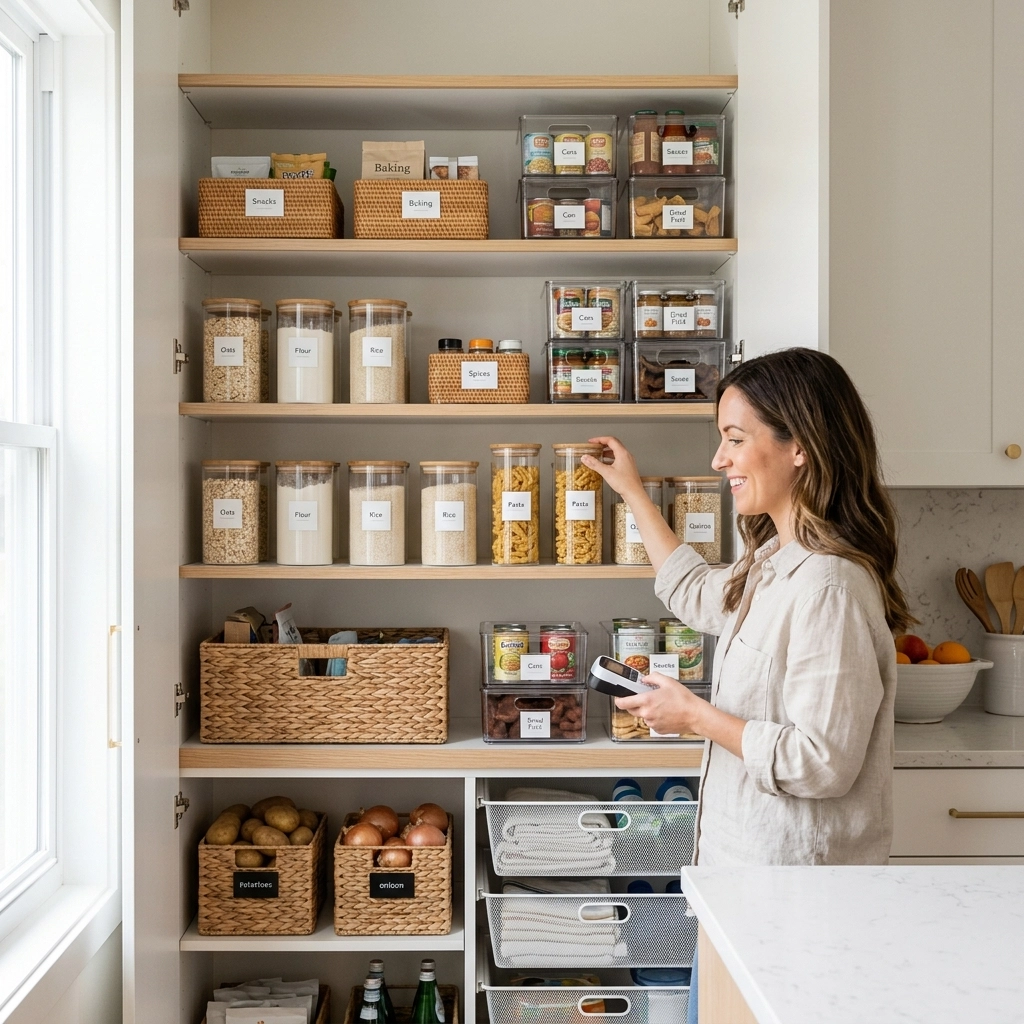
A cluttered pantry often leads to more than just a messy kitchen. It results in wasted food, duplicate purchases, and unnecessary stress during meal preparation. When every shelf is packed with half-opened bags and hidden jars, finding the right ingredients becomes a daily challenge. Fortunately, maximizing a small or poorly designed pantry does not always require a full renovation. By implementing strategic organization systems, it is possible to double the functional storage capacity of any kitchen space.
The following guide explores over 50 practical ideas to transform a chaotic pantry into a streamlined, efficient hub.
The Foundation: Decluttering and Auditing
Before purchasing bins or installing shelves, the space must be cleared. This foundational step ensures that storage solutions are built around actual needs rather than clutter.
The Full Empty-Out
Remove every single item from the pantry. Seeing the bare shelves provides a better perspective on the available dimensions and potential layout changes. It also allows for a deep clean. Dust and crumbs often accumulate in corners; using a multifunctional dust removing brush can help reach tight spots and ensure the surface is pristine before restocking.
The Expiration Check
Check the dates on every can, box, and bottle. Food items often hide in the back for years. Compost or dispose of anything past its prime. For items that are still safe to eat but unlikely to be used, consider donating them to a local food bank.
Grouping by Category
As items go back in, they should be grouped logically. Common categories include:
- Baking (flour, sugar, sprinkles)
- Breakfast (cereal, oatmeal, pancake mix)
- Grains and Pasta
- Canned Goods (beans, soups, vegetables)
- Snacks (chips, crackers, nuts)
- Condiments and Oils

Maximizing Vertical Space
Vertical space is the most underutilized asset in a pantry. If there is a large gap between a shelf and the one above it, that space is essentially wasted.
Shelf Risers and Tiers
Shelf risers create mini-shelves within a shelf. They are particularly effective for canned goods or spices, allowing for a “stadium seating” arrangement where the back rows are visible over the front rows.
Under-Shelf Baskets
These wire baskets slide onto an existing shelf and hang below it. They are ideal for lightweight items like bread, tortillas, or rolls that might otherwise get squished under heavier boxes.
Adjustable Shelving
If the pantry allows for it, moving shelves to fit the height of the items stored on them can reclaim inches of space. Store tall cereal boxes on one level and short canned goods on another with much tighter spacing.
Stackable Containers
Uniform, stackable containers utilize the full height of a shelf. When choosing containers, square or rectangular shapes are more space-efficient than round ones, as they leave no “dead air” in the corners.
The Power of Decanting
Decanting is the process of removing food from its original packaging and placing it into clear, airtight containers. While it requires an initial investment in jars, the long-term benefits for space and freshness are significant.
Visibility and Inventory Management
Clear containers allow for an instant visual check of how much flour or rice is left. This prevents the “hidden half-bag” syndrome, where a secondary bag is purchased because the first one was buried.
Eliminating Bulk
Cereal boxes and cracker packages are often mostly air. By decanting, the physical footprint of the food is reduced to its actual volume.
Aesthetic Uniformity
A pantry filled with mismatched, colorful packaging can look visually chaotic. Uniform jars create a sense of calm and order, making the space feel larger and more organized.

Utilizing Doors and Walls
When the shelves are full, look to the vertical surfaces of the pantry itself.
Over-the-Door Organizers
A classic over-the-door rack with pockets or wire bins can hold an incredible amount of inventory. These are perfect for:
- Spices and seasonings
- Small snack bags
- Packets of gravy or taco seasoning
- Extra sponges or cleaning supplies
Wall-Mounted Pegboards
If there is a blank wall inside the pantry, a pegboard offers modular storage. Hooks can hold measuring cups, colanders, or even small baskets for onions and garlic.
Command Hooks
Simple adhesive hooks can be placed on the inside of the door or the side walls to hang aprons, reusable grocery bags, or oven mitts.
Corner Solutions and Accessibility
Corners are notoriously difficult to organize, often becoming “black holes” where items disappear.
Lazy Susans (Turntables)
A rotating turntable is the ultimate solution for deep corners. With a simple spin, items at the back come to the front. These are excellent for oils, vinegars, and jars of peanut butter. For smaller items like spice packets or tea bags, a 360-degree rotating box can keep everything accessible and tidy.
Corner Shelving Units
L-shaped shelves designed specifically for corners can bridge the gap and provide a continuous surface for storage, preventing items from getting pushed into the hard-to-reach angles.
Pull-Out Drawers
If the budget allows, installing pull-out drawers (also known as roll-outs) ensures that nothing stays hidden at the back of a deep cabinet.

Categorization Strategies: Creating Zones
A “zone” is a dedicated area for a specific activity or meal type. This minimizes the time spent searching for related items.
The “Kid Zone”
Place healthy snacks and juice boxes on lower shelves where children can reach them independently. This empowers them to pack their own lunches and keeps them from climbing on shelves to find food.
The Baking Station
Group all baking essentials together. Keeping flour, sugar, baking soda, and vanilla in one bin or on one shelf makes it easy to pull everything out at once when it is time to bake.
Breakfast Nook
Store coffee, tea, honey, and oatmeal together. If space permits, a small basket can hold all the morning essentials for a quick grab-and-go experience. Even small items like napkins or tea towels can be tucked away in a large capacity storage bag to keep the zone looking clean.
Managing Oddly Shaped Items
Certain kitchen items do not fit well into standard bins or shelves.
Tension Rods for Dividers
Place tension rods vertically between shelves to create dividers for baking sheets, cutting boards, and muffin tins. This allows them to stand upright rather than being stacked in a heavy, precarious pile.
Magazine Files for Canned Goods
In a pinch, sturdy magazine files can be laid on their sides to act as gravity-fed can dispensers. They are also useful for holding boxes of aluminum foil, plastic wrap, and parchment paper.
Floor Baskets for Bulk Items
Heavy items like bags of potatoes, onions, or gallons of water should live on the floor of the pantry. Use sturdy wicker or plastic bins with wheels to make them easy to slide out. If there is a need to transport bulk groceries from the car to the pantry, a folding car utility bag can serve as a durable transitional storage solution.

The Role of Labeling
Labels are the finishing touch that ensures the system stays in place. Without labels, items are frequently put back in the wrong spot, leading to a slow return to chaos.
Chalkboard Labels
These are popular because they are erasable. If a jar previously held lentils but now holds split peas, the label can be updated in seconds.
Label Makers
For a clean, professional look, a traditional label maker provides uniform text. Labeling the edge of the shelf itself can also help family members know exactly where the “pasta” or “snacks” go.
“First In, First Out” (FIFO)
When restocking, place the newest items behind the older ones. This ensures that food is used before it expires. Labeling the tops of cans with the purchase date using a permanent marker can also assist with this rotation.
50+ Quick Organization Ideas
To summarize the possibilities, here is a list of actionable ideas to implement:
- Decant dry goods into clear, airtight containers.
- Use a Lazy Susan for oils and vinegars.
- Install an over-the-door rack for spices.
- Use shelf risers for canned goods.
- Hang a pegboard on an empty wall.
- Use tension rods for upright tray storage.
- Place baskets on the floor for heavy produce.
- Add under-shelf baskets for bread or wraps.
- Use magazine holders for foil and plastic wrap.
- Label every bin by category.
- Store small packets in a rotating organizer.
- Group baking supplies in a portable caddy.
- Use clear bins for snack bars and pouches.
- Install pull-out drawers in deep cabinets.
- Use a tiered spice rack for visibility.
- Hang measuring cups on the inside of the door.
- Store back-stock on the highest, hardest-to-reach shelves.
- Clip chip bags and hang them from a wire rack.
- Use a “First to Expire” bin for items that need to be used quickly.
- Store cereal in pourable containers to keep it fresh.
- Use wine racks for large water bottles or soda.
- Keep a step stool nearby to access high shelves safely.
- Use uniform jars for a streamlined look.
- Repurpose office organizers for small pantry items.
- Store onions and potatoes separately (they spoil each other).
- Use wire bins for items that need airflow, like fruit.
- Install a motion-sensor light for dark pantries.
- Create a “Lunch Prep” station with all sandwich fixings.
- Use a magnetic strip for metal lids or small tools.
- Line shelves with easy-wipe liners.
- Keep a grocery list inside the pantry door.
- Use small drawers for tea bags and sugar packets.
- Stack canned goods using specialized plastic dispensers.
- Use hooks for reusable grocery bags.
- Store pet food in large, airtight rolling bins.
- Keep napkins and paper towels in a dedicated overhead basket.
- Use a turntable for vitamins and supplements.
- Create a “Coffee Station” with beans, filters, and mugs.
- Organize by color for a visually pleasing “rainbow” effect.
- Use “S” hooks on wire shelving to hang utensils.
- Store large appliances (like mixers) on the lowest shelf.
- Use a dry-erase board to track inventory.
- Keep a dedicated “Smoothie Bin” with protein powder and seeds.
- Use tiered organizers for baby food jars.
- Repurpose a shoe organizer for miscellaneous small items.
- Add a small “Donation Box” for unwanted, unexpired items.
- Use chalkboard paint on the inside of a door for notes.
- Store tablecloths and runners on pants hangers.
- Keep “Open” and “Closed” sides for bulk items.
- Regularly audit the space every three months.
- Use a small brush to keep the corners clean of debris.

Maintaining the System
The most difficult part of pantry organization is not the initial setup, but the maintenance. Over time, items tend to drift away from their assigned homes.
The Weekly Reset
Spend five minutes once a week: perhaps right before grocery shopping: to tidy up the shelves. Put stray items back in their zones and check if any bins are nearly empty. This prevents a major reorganization project down the road.
The One-In, One-Out Rule
For every new specialized gadget or bulk item brought into the pantry, try to remove something that is no longer being used. This keeps the volume of items consistent with the available space.
Involving the Household
If multiple people use the pantry, ensure everyone understands the system. Clear labels are the best way to communicate where things belong without having to explain it constantly. When everyone knows that “the snacks go in the blue bin,” the system is much more likely to succeed.
By treating the pantry as a modular, evolving space rather than a static storage closet, any kitchen can become more functional. Whether through decanting, utilizing vertical space, or simply labeling existing bins, these changes create a more enjoyable and efficient environment for cooking and living.

