
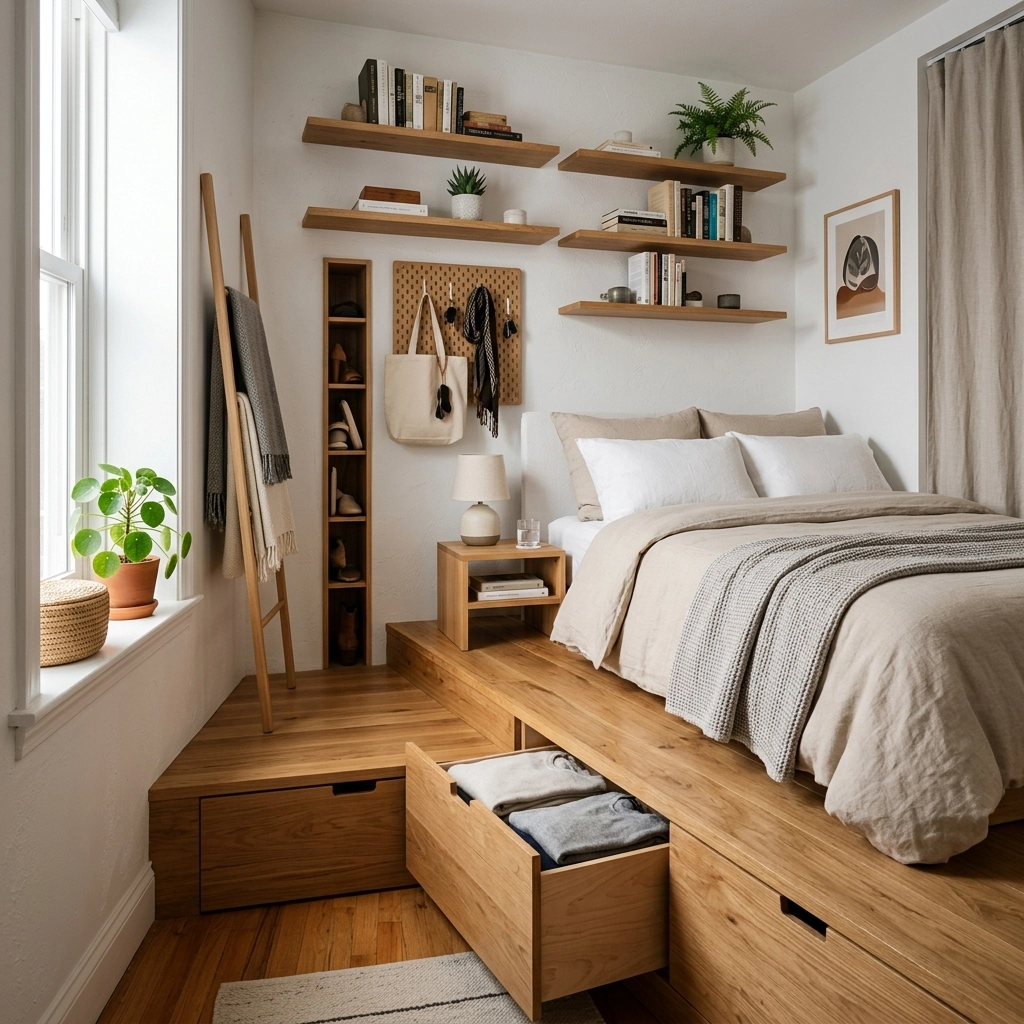
Maximizing a small bedroom requires a shift in perspective. Instead of viewing limited square footage as a constraint, it can be seen as an opportunity to curate a more intentional and efficient living environment. When floor space is at a premium, every inch must serve a purpose. Organization is not merely about tidying up; it is about engineering a space that supports daily routines without the friction of clutter.
The following guide explores twenty-five innovative strategies to reclaim space and improve the functionality of a compact bedroom. These ideas focus on vertical expansion, hidden storage, and the repurposing of unconventional areas.
Redefining the Bedside Area
The traditional nightstand often consumes more space than its utility justifies. In a small room, large bedside tables can block pathways or make the bed feel cramped.
1. Trade the Nightstand for a Slim Bookcase
Replacing a standard nightstand with a tall, narrow bookcase offers a significant increase in storage capacity. While a traditional table provides only a top surface and perhaps one drawer, a slim bookcase utilizes vertical space. The top shelf still functions as a landing spot for a lamp and water glass, while the lower shelves can house a personal library, storage bins, or electronic devices. This swap maintains the same footprint while quadrupling the available storage area.
2. Turn the Headboard into Storage
Many headboards are purely decorative, but they can be high-functioning storage units. Choosing or building a headboard with integrated cubbies or side-access shelving allows for the elimination of bedside tables entirely. This setup is ideal for storing books, alarm clocks, and charging stations within arm’s reach. By keeping these items within the frame of the bed, the surrounding floor remains clear, contributing to a more open feel in the room.
3. Use a Bedside Pocket Caddy
In extremely tight quarters where even a slim shelf is not feasible, a fabric bedside caddy is an effective solution. These organizers tuck securely under the mattress or clip onto the bed frame. They provide dedicated pockets for a phone, remote, glasses, and a tablet. Because they occupy zero floor space, they are excellent for “floating” bed layouts or rooms where the bed is positioned flush against a wall.
4. Extend the Window Sill into a Mini Shelf
If the bed is positioned near a window, the existing sill can be transformed into a functional ledge. Adding a custom-cut wood or acrylic topper that extends the depth of the sill by a few inches creates a sturdy platform. This “extended sill” can hold plants, a reading lamp, or a morning coffee, effectively acting as a built-in nightstand that utilizes the architecture of the room rather than adding furniture.

Utilizing Vertical Space and “Dead Zones”
The most underutilized real estate in any small room is the space above eye level. By looking upward, one can find several square feet of potential storage that does not interfere with movement.
5. Build a “Bridge” Shelf Over the Bed
A bridge shelf consists of a series of cabinets or open shelves that span the wall directly above the headboard. This configuration creates a built-in look that frames the bed. It is an ideal location for items that are needed occasionally but not daily, such as extra linens, seasonal decor, or an extensive book collection. When painted the same color as the wall, these shelves blend into the architecture, preventing the room from feeling “top-heavy.”
6. Turn the Space Above the Door into Storage
The area between the top of the bedroom door and the ceiling is frequently ignored. Installing a single, deep shelf in this location provides a discreet spot for storage bins. Since this area is out of the direct line of sight, it is perfect for storing items like travel gear, off-season clothing, or spare pillows. Using aesthetically pleasing baskets or labeled bins ensures the space looks intentional rather than cluttered.
7. Install a Narrow Ledge Around the Room
A “picture ledge” or a thin shelf installed at chair-rail height can serve multiple purposes. Unlike deep shelves that can feel intrusive, a narrow ledge (roughly 3 to 4 inches deep) provides a place to lean framed art, display small objects, or set down a phone. Running this ledge along one or two walls creates a cohesive design element while providing a “landing strip” for small items that would otherwise clutter dresser tops.
8. Create a Pegboard Wall Organizer
Pegboards are no longer reserved for garages or craft rooms. A sleek, painted pegboard mounted on a bedroom wall offers a modular storage system that can evolve with the user’s needs. Hooks can hold headphones and jewelry, while small clip-on baskets can store stationery or skincare products. This vertical arrangement keeps small items visible and organized, preventing them from disappearing into the depths of a junk drawer.
9. Create a “Lofted” Zone Without a Loft Bed
While not everyone wants to sleep in a loft bed, the “lofting” concept can be applied to storage. By using floor-to-ceiling wardrobes or shelving units along a single wall, a “storage wall” is created. The highest shelves function as the lofted area for long-term storage, while the lower sections are reserved for daily essentials. This vertical consolidation leaves the rest of the room free for living and movement.

Optimizing the Closet and Wardrobe
Closets are often the primary source of frustration in small bedrooms. Improving the internal organization of a closet can often remove the need for a separate dresser in the main room.
10. Hide a Dresser Inside the Closet
If the closet is wide enough, placing a low dresser inside, beneath the hanging clothes, is a space-saving masterstroke. This eliminates the need for a bulky dresser in the bedroom’s main floor area, providing more “breathing room” around the bed. This layout works best with short-hanging items like shirts and folded trousers, allowing the dresser top to serve as a shelf for shoes or bags.
11. Double Up Closet Rods
Most standard closets come with a single rod at shoulder height, leaving a large amount of empty space near the floor. Adding a second, lower tension rod creates two tiers of hanging space. This is particularly effective for shorter garments like jackets, skirts, and folded-over slacks. Doubling the hanging capacity often negates the need for additional external storage units.
12. Use Over-Door Organizers for More than Shoes
Over-the-door pocket organizers are highly versatile. Beyond footwear, they can be used to categorize socks, underwear, hair styling tools, or even a collection of scarves and belts. Choosing clear pockets allows for quick visual identification, while fabric pockets provide a cleaner, more uniform look. This strategy utilizes the “back” of the door, which is otherwise wasted space.
13. Slide Under-Shelf Baskets into Existing Shelves
To make the most of the vertical gaps between fixed closet shelves, under-shelf wire baskets can be used. These baskets slide onto the existing shelf and hang below it, creating a “mezzanine” level for flat items like clutches, belts, or folded t-shirts. They are particularly useful for preventing tall stacks of clothes from toppling over.
14. Build a Shallow “Wardrobe Wall”
In rooms without a built-in closet, a “wardrobe wall” can be constructed using shallow cabinets. Many standard wardrobes are 24 inches deep, which can overwhelm a small room. Opting for units that are only 12 to 15 inches deep allows for folded storage and sideways hanging rods. This slim profile provides ample storage without significantly encroaching on the floor plan.

Innovative Floor and Corner Solutions
Corners and the space under the bed are often magnets for “invisible” clutter. Bringing structure to these areas can significantly increase a room’s storage capacity.
15. Use a Storage Bench or Trunk at the Foot of the Bed
The space at the foot of the bed is often left empty or occupied by a simple bench. Replacing this with a storage trunk or an upholstered ottoman with a lift-top lid provides a hidden compartment for bulky items. This is an excellent location for spare duvets, heavy winter coats, or extra pillows that are only used occasionally.
16. Add Under-Bed Drawers (Not Just Bins)
While plastic bins are common for under-bed storage, they can be difficult to access. Investing in rolling wooden drawers or low-profile units specifically designed for the space under the bed creates a more permanent and functional storage solution. Labeling these drawers by category: such as “Gym Gear,” “Sleepwear,” or “Linens”: ensures that the space remains organized and that items are easy to retrieve.
17. Turn Corners into Floating Shelf Towers
Corners are frequently underutilized. Installing a vertical stack of floating corner shelves from waist height to the ceiling creates a “tower” of storage. This is a great way to display decor or store books without taking up any actual floor space. Because the shelves are floating, the floor remains visible, which helps maintain the illusion of a larger room.
18. Use a Rolling Cart as a Mobile Nightstand
A three-tiered rolling cart provides flexible storage that can be moved as needed. It can act as a nightstand during the evening and be tucked into a corner or a closet during the day to clear a path. This mobility is particularly useful in multi-functional rooms where the bedroom may also serve as a home office or workout space.
19. Exploit That Gap Between Bed and Wall
If the bed frame does not sit perfectly flush against the wall, a small gap often remains. A skinny rolling shelf, sometimes called a “gap filler,” can be slid into this space. These units are often only 5 or 6 inches wide but can hold a surprising amount of items, such as books, magazines, or even a hidden power strip for charging devices.

Specialized Mounting and Small-Scale Storage
The final details of bedroom organization involve addressing the small, everyday items that contribute to a sense of chaos if left loose.
20. Hang a Slim Fold-Down Desk or Vanity
For those who need a workspace but lack the room for a desk, a wall-mounted fold-down desk is an ideal solution. These units fold flat against the wall when not in use, appearing as a simple cabinet or mirror. When needed, the front panel drops down to provide a sturdy surface for a laptop or a vanity setup. This ensures the room remains a restful sleeping space most of the time.
21. Create a Wall Hook “Drop Zone”
A “drop zone” is a designated area for items that are frequently used but don’t have a specific home, such as bags, robes, or a coat. Installing a row of high-quality hooks near the door or behind the bed prevents the common habit of draping clothes over a chair. By giving these items a vertical home, the room stays tidier with minimal effort.
22. Store Vertically with Hanging Rails and Clips
Inspired by kitchen organization, wall-mounted rails with S-hooks can be very effective in a bedroom. These can be used to hang belts, hats, or even small baskets for tech accessories. Clips can be used to hang photos or reminders, keeping the surfaces of dressers and nightstands clear for a more minimalist aesthetic.
23. Install Magnetic Strips for Tiny Metal Items
Small metal items like bobby pins, tweezers, and nail clippers often clutter drawer tops. Mounting a small magnetic strip inside a closet door or on the side of a vanity provides a secure, visible spot for these items. This prevents the need to rummage through drawers and keeps small essentials organized and accessible.
24. Use Transparent or QR-Labeled Bins
For long-term storage under the bed or on high shelves, clarity is essential. Using transparent bins allows for a quick visual inventory. Alternatively, for opaque bins, a labeling system using QR codes can be highly effective. A simple scan of the code with a smartphone can reveal a list of the contents, preventing the need to pull down heavy boxes to find a specific item.
25. Create a Basket System with Clear Purposes
Baskets are excellent for corralling “loose” items, but they can quickly become “junk bins” if not managed correctly. Assigning a strict purpose to each basket: such as “To Be Repaired,” “Library Books,” or “Extra Blankets”: ensures that they remain a functional part of an organization system. Consistent categorization is the key to maintaining order over the long term.

Maintaining an Organized Environment
Implementing these organization ideas is the first step toward a more functional small bedroom. However, the longevity of these systems depends on consistent maintenance. In a small space, even a few misplaced items can create a feeling of clutter.
It is helpful to establish a daily “reset” routine, where items are returned to their designated spots before bed. Periodically reviewing the contents of storage bins and closets ensures that only necessary items are kept, preventing the gradual accumulation of unnecessary belongings.
For individuals looking to expand their knowledge of home management and efficient living, resources are available to help refine these skills. The Paris Wheel blog offers various insights into modern lifestyle adjustments. Additionally, for any inquiries regarding home organization projects or space planning, the customer help section can provide further guidance on getting the most out of a living space.
The goal of a well-organized bedroom is to create a sanctuary that promotes rest and relaxation. By utilizing vertical space, rethinking traditional furniture, and employing smart storage solutions, even the smallest bedroom can feel spacious, organized, and perfectly tailored to the occupant’s needs. Understanding the principles behind these strategies allows for a more creative and personalized approach to home organization. For more information about the mission of providing accessible learning for home and lifestyle improvements, visit the about page.

