
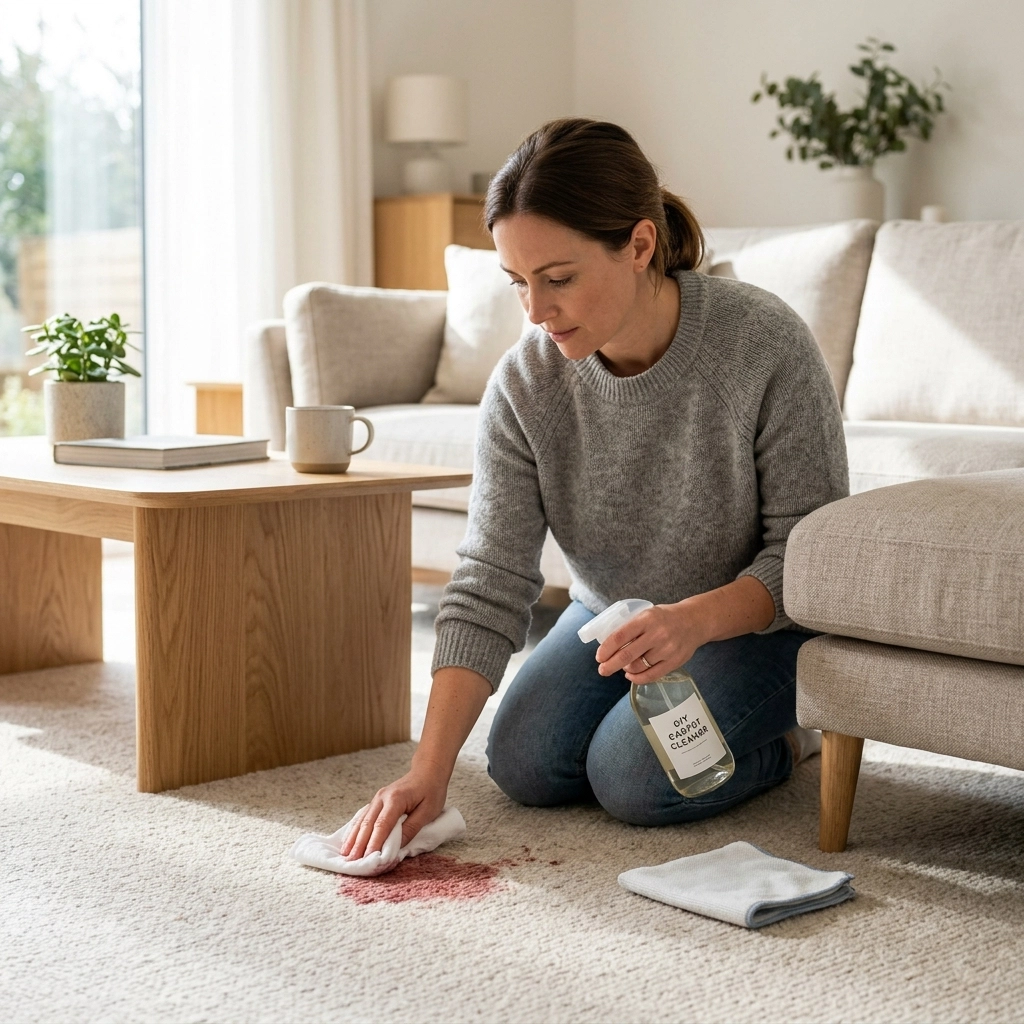
Maintaining a pristine carpet is a significant challenge for any homeowner. As one of the largest filters in the home, carpeting traps dust, allergens, and, inevitably, spills. Whether it is a splash of red wine during a dinner party or a muddy paw print from a pet, the immediate reaction is often a mixture of panic and a hurried attempt to clean. However, the methods used in those first few minutes can dictate whether the carpet is restored or permanently damaged.
Many common approaches to stain removal actually exacerbate the problem, driving pigments deeper into the fibers or causing structural damage to the carpet backing. Understanding the science of carpet fibers and the chemistry of different staining agents is essential for effective home maintenance. This guide outlines the seven most frequent mistakes made during carpet stain removal and provides practical, professional-grade solutions for each.
1. The Peril of Procrastination: Waiting Too Long
One of the most frequent errors in home maintenance is the “I’ll deal with it later” mentality. When a spill occurs, the clock starts ticking immediately. A liquid spill is not a static event; it is a dynamic process involving absorption and chemical bonding.
Why It Is a Mistake
As a liquid sits on the carpet, it moves through several phases. Initially, it rests on the surface tension of the carpet fibers, especially if the carpet has been treated with a protectant. Over time, gravity pulls the liquid down the fiber shaft and into the primary and secondary backing. Once the liquid reaches the padding, it becomes significantly harder to extract.
Furthermore, many substances, such as coffee, tea, or wine, contain natural dyes (tannins). When these substances remain on the fibers for an extended period, they can undergo a process called “heat-setting” or simply chemical bonding. This turns a temporary spill into a permanent discoloration of the fiber itself.
The Fix: Immediate Action
The most effective way to handle a spill is to treat it within the first sixty seconds. For liquid spills, the objective is maximum absorption before the liquid can travel downward.
- For Liquids: Use a clean, white cotton towel or heavy-duty paper towels. Press down firmly to draw the liquid upward. Do not move the cloth side-to-side; focus on vertical pressure.
- For Solids: If the spill involves food or mud, use a dull knife or a spoon to gently lift the solid material away from the fibers. Avoid pressing down, as this pushes the solids into the weave.
- The Cold Water Method: For many water-based spills, a light misting of cold water followed by more blotting can dilute the remaining pigment without the need for harsh chemicals.

2. The Friction Trap: Scrubbing Instead of Blotting
When faced with a stubborn mark, the natural human instinct is to apply elbow grease. Many people grab a stiff brush or a rag and begin scrubbing vigorously back and forth. This is perhaps the most destructive mistake possible in carpet care.
Why It Is a Mistake
Carpet fibers, whether synthetic like nylon and polyester or natural like wool, are twisted and finished in a specific way to maintain their appearance and texture. Vigorous scrubbing untwists these fibers, leading to a condition known as “pilling” or “fuzzing.” Once the fibers are frayed, the texture of the carpet is permanently altered. Even if the stain is removed, a permanent “fuzzy” or worn spot will remain, which reflects light differently and always looks slightly “off.”
Additionally, scrubbing spreads the staining agent. A small, concentrated spill can quickly become a large, diluted mess as the scrubbing motion pushes the particles outward into unaffected fibers.
The Fix: The Blotting Technique
The goal should always be to transfer the stain from the carpet to the cleaning cloth, not to move it around the floor.
- Work from the Outside In: Always start blotting at the outer edges of the spill and move toward the center. This prevents the stain from spreading.
- Constant Cloth Rotation: As the cleaning cloth absorbs the stain, rotate it to a clean section. Using a soiled part of the cloth will only re-deposit the stain back into the carpet.
- Weighted Absorption: For deep spills, after the initial cleaning, place a stack of clean white towels over the spot and put a heavy object (like a plastic-wrapped book) on top. Leave it for several hours to “wick” the remaining moisture out of the padding.
3. Over-Wetting: The “Drowning” Method
There is a common misconception that more cleaning solution or more water leads to a cleaner result. In reality, saturation is a leading cause of long-term carpet damage and recurring stains.
Why It Is a Mistake
Excessive moisture can lead to a phenomenon known as “wicking.” This occurs when the liquid travels deep into the carpet padding. As the surface dries, the moisture in the padding evaporates and travels back up the fibers, bringing the dissolved stain back to the surface. This is why a stain may seem to disappear, only to reappear a few days later.
More seriously, over-wetting can damage the carpet’s structure. Most carpets use a latex-based adhesive to hold the fibers to the backing. Constant saturation can cause “delamination,” where the carpet separates from its backing, leading to ripples and bubbles. Furthermore, damp padding is a breeding ground for mold, mildew, and persistent odors.
The Fix: Controlled Moisture
Effective cleaning requires a “damp, not wet” approach.
- Use a Spray Bottle: Instead of pouring cleaner directly onto the carpet, use a spray bottle to apply a fine mist. This ensures the solution stays on the surface fibers where the stain is located.
- Rinse Sparingly: If a cleaner requires rinsing, use a damp cloth to “blot-rinse” the area rather than pouring water over it.
- Accelerated Drying: Once cleaning is finished, use a floor fan or a hair dryer (on a cool setting) to dry the area as quickly as possible. Proper airflow is essential to prevent mold growth.

4. The Chemical Gamble: Using the Wrong Cleaner
In a moment of frustration, many people reach for whatever is under the kitchen sink: dish soap, bleach, or “all-purpose” cleaners. This is a dangerous gamble that can result in bleached-out spots or permanent fiber damage.
Why It Is a Mistake
Carpet fibers are sensitive to pH levels. For example, wool is a protein-based fiber and can be easily damaged or dissolved by high-alkaline cleaners or bleach. Synthetic fibers like nylon have “dye sites” that can be permanently altered by the wrong chemical, resulting in a permanent color change.
Furthermore, many household soaps are too “sudsy” for carpets. Without professional extraction equipment, it is nearly impossible to rinse all the soap out. The remaining residue is sticky; it acts as a magnet for dirt. This results in the “re-soiling” effect, where the cleaned spot becomes darker and dirtier than the rest of the carpet within weeks.
The Fix: Identify and Test
Before applying any chemical, one must know what they are dealing with.
- Identify the Fiber: Check the manufacturer’s documentation. If the carpet is wool, only use “WoolSafe” certified products. For synthetics, a neutral pH cleaner is generally safest.
- The Spot Test: Always test any cleaner in an inconspicuous area, such as inside a closet or behind a heavy piece of furniture. Apply the cleaner, wait ten minutes, and blot with a white cloth. If any color transfers to the cloth or the carpet fiber changes shade, do not use that product.
- The “Less is More” Rule: Start with the mildest possible solution. Often, a mixture of 1/4 teaspoon of clear, non-bleach dish detergent and one cup of lukewarm water is more effective and safer than a harsh commercial spray.
For those looking to maintain a generally cleaner environment to prevent the buildup of grime, following a comprehensive cleaning schedule can help keep floors in better condition between accidental spills.
5. Skipping the Prep: The “Sludge” Creator
When a spill occurs, the instinct is to immediately apply a wet cleaner. However, if the area is dusty or has solid debris, skipping the preparation phase can make the situation much worse.
Why It Is a Mistake
Most carpets contain a significant amount of “dry soil”: fine dust and grit that settles at the base of the fibers. When liquid is added to this dry soil without removing it first, it turns into a muddy sludge. This sludge is far more difficult to remove than a simple liquid stain. Furthermore, if you blot or scrub over solid particles (like crumbs or dried mud), those particles can act like sandpaper, scratching and dulling the carpet fibers.
The Fix: Dry Extraction First
Before any liquid touches the carpet, the area must be cleared of dry debris.
- Vacuum Thoroughly: If the stain is dry (like dried mud or a spilled powder), vacuum the area multiple times from different angles. This removes the bulk of the “stain” before it becomes a “wash.”
- Gentle Scraping: For semi-solids (like peanut butter or jelly), use a spoon to lift as much as possible. Work from the outside in to ensure you aren’t widening the affected area.
- Post-Vacuuming: Once the area is dry after a wet cleaning, vacuum again. This helps reset the carpet pile and removes any residue that may have crystallized during the drying process.

6. Inadequate Rinsing: The Soap Residue Magnet
Many homeowners believe that once the stain is no longer visible, the job is done. They leave the cleaning solution in the carpet to “keep working.” This is a major error in carpet maintenance.
Why It Is a Mistake
As mentioned previously, detergent residue is one of the primary causes of “recurring” stains. Most cleaning agents are surfactants, designed to attract and hold onto oil and dirt. If the surfactant remains in the carpet, it continues to do its job, grabbing onto the dust from the air and the dirt from the bottom of shoes. Within a month, the spot where the wine spill was will be replaced by a dark, circular patch of concentrated grime.
The Fix: The Rinse and Extract Method
Rinsing is just as important as the initial cleaning.
- Clean Water Mist: Once the stain is gone, lightly mist the area with plain, room-temperature water.
- The Final Blot: Use a fresh, dry white towel to blot up the rinse water. Continue this process until the towel no longer feels “tacky” or soapy when pressed against the carpet.
- Vinegar Rinse (For Synthetics): A solution of one part white vinegar to two parts water can help neutralize alkaline detergent residues on synthetic carpets. The vinegar helps break down the soap bond, making it easier to blot away.
Properly managing the layout of a room can also help minimize these issues; for instance, avoiding certain organization mistakes in high-traffic areas like bedrooms can reduce the frequency of spills and the wear on specific carpet sections.
7. Treating Every Stain the Same: Ignoring Chemistry
A “one-size-fits-all” approach to stain removal is rarely successful. A method that works for mud will be completely ineffective against an oily grease stain or a protein-based blood stain.
Why It Is a Mistake
Stains are generally categorized into four types: Water-based, Oil-based, Protein-based, and Tannin/Dye-based. Using the wrong chemistry can actually “set” a stain. For example, using hot water on a protein stain (like blood or milk) will “cook” the protein, bonding it permanently to the fibers. Similarly, using a high-pH cleaner on a tannin stain (like coffee) can darken the discoloration.
The Fix: Specialized Strategies
Understanding the nature of the spill allows for a targeted attack.
- Protein Stains (Blood, Egg, Dairy): Use only cold water and an enzymatic cleaner. Enzymes literally “eat” the organic proteins, breaking them down so they can be blotted away.
- Tannin Stains (Coffee, Tea, Wine): These are acidic. They respond best to a slightly acidic cleaning solution (like the vinegar/water mix) or a specialized tannin remover.
- Grease and Oil (Butter, Makeup, Motor Oil): These require a solvent or a grease-cutting dish soap. Standard water-based cleaners will simply slide off the oil.
- Pet Stains: These require specialized enzymatic cleaners that specifically target urea and uric acid salts. Standard cleaners may remove the visual mark but will leave the odor-causing salts behind, which can lead to “re-offending” by the pet.

Advanced Troubleshooting: When DIY Isn’t Enough
While many stains can be handled with the techniques mentioned above, there are times when professional intervention is necessary. Attempting to fix a complex issue without the proper tools can result in irreparable damage.
Identifying “Unfixable” DIY Stains
If a stain covers an area larger than a dinner plate, or if the carpet is made of specialty materials like silk, sisal, or high-end wool, it is best to consult a professional immediately. Additionally, “bleeding” stains: where the dye from a rug is running into the surrounding carpet: require specialized drying and stabilizing agents that are not typically available to the average consumer.
The Problem of “Wicking” Redux
If a stain keeps coming back despite multiple cleaning attempts, it is likely that the “well” of the stain is in the padding. Homeowners lack the high-powered suction (measured in CFMs) required to pull moisture from four inches deep. A professional carpet cleaner uses truck-mounted systems that can extract liquid from the very bottom of the floor assembly, ensuring the stain does not return.
Essential Carpet Care Kit
To avoid these seven mistakes, it is helpful to have a pre-assembled “Stain Emergency Kit” stored in a convenient location. This prevents the panicked search for supplies that often leads to using the wrong chemicals.
The Essential Kit Includes:
- A stack of clean, white cotton towels (colored towels can transfer dye).
- A spray bottle of distilled water.
- A mild, clear dish soap (no bleach, no dyes).
- White vinegar.
- A dull spatula or spoon for solid removal.
- An enzymatic cleaner (specifically for pet owners).
- A small hand fan for rapid drying.

Long-Term Prevention Strategies
The best way to fix a carpet stain mistake is to prevent the stain from occurring or to make the carpet more resilient.
Protective Coatings
Many modern carpets come with a factory-applied fluorochemical treatment (like Scotchgard or Teflon). These treatments create a “tension” on the fiber that causes liquids to bead up rather than soak in. However, these treatments wear off over time due to foot traffic and vacuuming. Re-applying a protectant every 12 to 18 months can buy precious minutes during a spill, allowing for much easier blotting.
Strategic Rug Placement
In high-risk areas, such as under a dining table or in an entryway, using a washable area rug over the wall-to-wall carpet can provide a sacrificial layer. It is far easier to replace or professionally clean a 5×8 rug than it is to replace 500 square feet of installed carpeting.
Regular Professional Maintenance
Even with the best home care, carpets should be professionally “steam cleaned” (hot water extraction) every 12 to 18 months. This process removes the deep-seated grit that acts as an abrasive, cutting into fibers and making them more porous and prone to staining.
By avoiding the common pitfalls of scrubbing, over-wetting, and using inappropriate chemicals, homeowners can significantly extend the life and beauty of their flooring. Carpet care is less about force and more about the patient application of correct chemistry and physics. When the next spill happens, a calm, methodical approach using the “blot, don’t scrub” rule will almost always yield the best results.

