
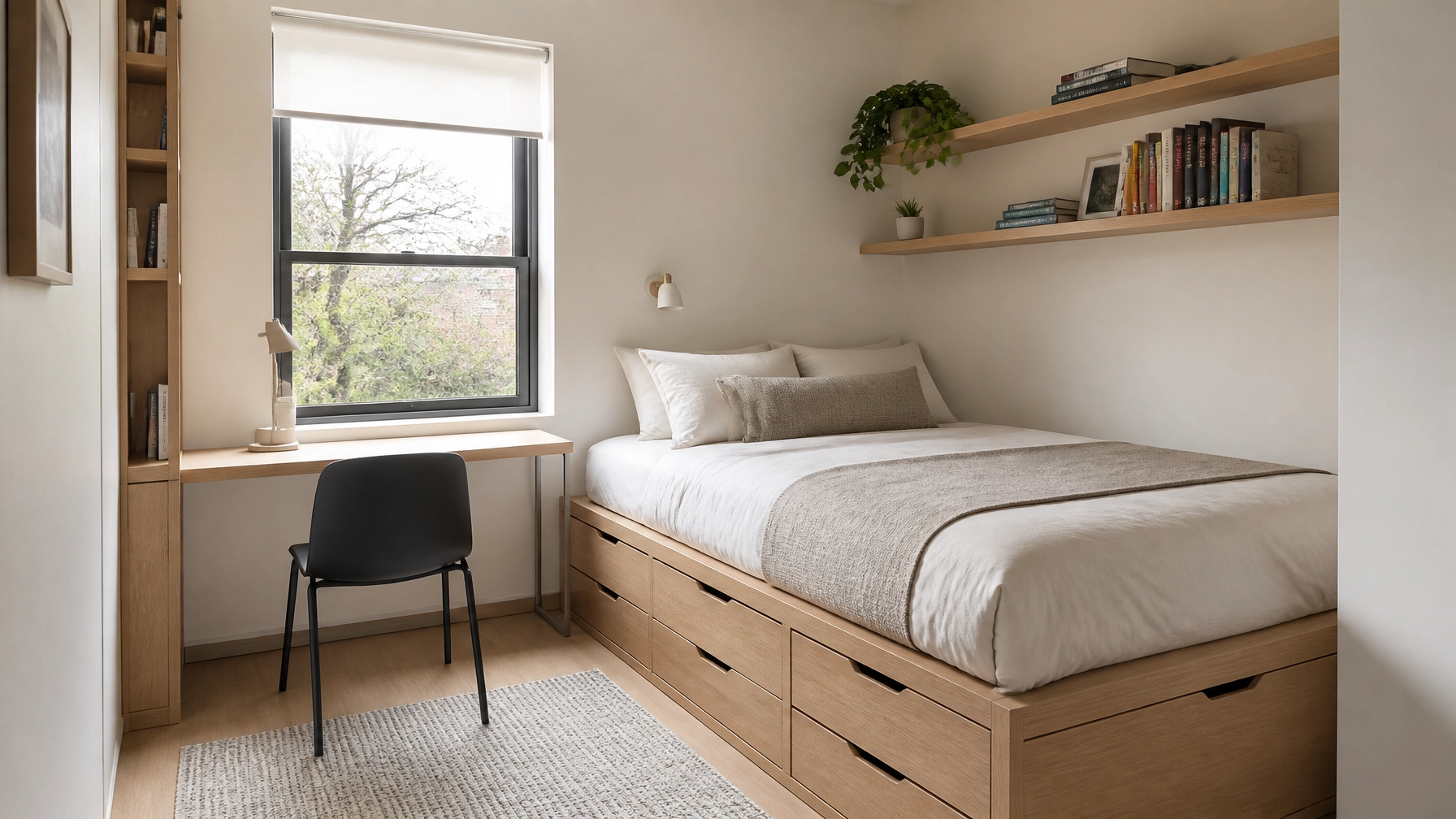
A small bedroom can often feel like a puzzle where the pieces don’t quite fit. When floor space is limited, every square inch becomes premium real estate. However, a lack of square footage does not have to mean a lack of comfort or style. By shifting the focus from how much space is available to how that space is utilized, it is possible to transform even the tiniest sleeping quarters into a highly functional, serene retreat.
Achieving an organized bedroom requires a combination of smart furniture choices, creative vertical solutions, and disciplined maintenance habits. This guide explores over 50 practical examples and storage strategies to help maximize a small bedroom, ensuring that everything from clothing to tech accessories has a dedicated home.
Laying the Groundwork: Decluttering and Layout
Before introducing new storage containers or furniture, the most effective step in organizing a small room is to reduce the volume of items within it.
1. Perform a Ruthless Declutter
The foundation of any organized space is having less to organize. Items that are not used, loved, or necessary should be removed. This includes clothing that no longer fits, old magazines, and decor that contributes to visual noise rather than aesthetic value.
2. Relocate Non-Bedroom Items
Small bedrooms often become a “catch-all” for items that belong elsewhere. Paperwork, hobby supplies, and bulky luggage should be moved to a home office, hallway closet, or utility area. This frees up the bedroom to focus solely on sleep and relaxation.
3. Define a “Home” for Every Category
Disorganized spaces often result from items “floating” without a specific place. By designating a exact spot for jewelry, chargers, and books, the likelihood of clutter accumulating on flat surfaces decreases significantly.
4. Clear Flat Surfaces
Limit the items on nightstands and dressers. A lamp, a clock, and perhaps one decorative item are usually sufficient. Keeping these surfaces clear creates an immediate sense of openness and calm.
5. Re-evaluate Bed Size
While a king-sized bed is luxurious, it can overwhelm a small room. In many cases, downsizing to a queen or a double can reclaim valuable floor space for a desk or a much-needed dresser.
6. Optimize the Furniture Flow
Arrange furniture so that doors, drawers, and walkways are completely unobstructed. If a dresser drawer cannot open fully because it hits the bed, the layout needs adjustment to maintain functionality.
7. Create Functional Zones
Even in a small room, zones can be established. A sleeping zone, a dressing zone, and a small work or reading corner help dictate where specific storage solutions should be placed.
Maximizing the Bed: The Core of the Room
The bed is typically the largest item in the room, making the space around and under it the most valuable for storage.
8. Built-in Drawer Beds
Choosing a bed frame with integrated drawers is one of the most efficient ways to add storage without increasing the furniture footprint. These drawers are ideal for extra linens, sweaters, or jeans.
9. Roll-out Under-bed Bins
For frames without built-in drawers, low-profile bins with wheels provide easy access to items stored beneath the mattress. Clear plastic bins allow for quick identification of contents, while fabric bins offer a softer look.
10. Seasonal Clothing Rotation
The area under the bed is perfect for off-season storage. By rotating winter coats or summer dresses into under-bed bins, the primary closet space stays streamlined for current daily use.
11. Vacuum-Sealed Storage Bags
To maximize under-bed space, vacuum bags can compress bulky items like comforters, pillows, and heavy winter gear to a fraction of their original size.
12. Utilize Bed Risers
If a bed frame is too low for storage bins, risers can be used to lift the bed by several inches. This simple adjustment can create enough clearance for standard storage containers.
13. High-Sleeper or Loft Beds
In rooms with high ceilings, a loft bed elevates the sleeping area, leaving the floor below open for a full desk, a lounge area, or a secondary wardrobe.
14. Daybeds with Storage
For guest rooms or multi-use spaces, a daybed serves as a sofa during the day and a bed at night. Many models include deep drawers that provide significant storage capacity.
Smart Furniture for Small Spaces
When space is at a premium, every piece of furniture must work harder. Multi-functional and slimline pieces are essential.
15. Storage Headboards
Replacing a standard headboard with one that features built-in shelving or hidden compartments can eliminate the need for separate bookcases or bulky nightstands.

16. Foot-of-Bed Trunks
A classic trunk or storage bench at the end of the bed provides a place to sit while putting on shoes and a deep cavity for storing extra blankets or pillows.
17. Storage Ottomans
Small ottomans with removable lids serve as seating, footrests, or: when topped with a tray: side tables. They are perfect for hiding away miscellaneous items like electronic accessories or magazines.
18. Nightstands with Closed Storage
Instead of an open-leg table, choose a nightstand with drawers or a cabinet. This hides the visual clutter of medications, charging cables, and personal items.
19. Wall-Mounted Nightstands
In extremely narrow rooms, a floating shelf or a wall-mounted drawer replaces a floor-standing nightstand, keeping the floor visible and making the room feel larger.
20. Dressers in the Closet
If the bedroom floor is too crowded, placing a low dresser inside the closet can free up floor space while keeping clothing organized and out of sight.
21. Cube Shelving Systems
Cube organizers are highly versatile. They can be fitted with fabric bins to act as a dresser or left open to display books and decor.
22. Fold-Down Desks
A wall-mounted desk that flips up or down provides a workspace when needed but stays flush against the wall when the workday is over.
23. Slim Rolling Carts
A narrow three-tier cart can be used for makeup, skincare, or office supplies. Its portability allows it to be tucked into a corner or a closet when not in use. For those looking to organize a vanity area, a 360-degree rotating cosmetic box can be a great addition to keep small items contained and accessible.
Vertical Space and Wall Solutions
When the floor is full, look up. The walls offer immense storage potential that often goes unused.
24. Floating Shelves
Install shelves above the bed or desk to hold books and decorative items. This keeps surfaces clear and adds visual interest without occupying floor space.
25. High-Level Perimeter Shelving
A single shelf installed 12 to 18 inches below the ceiling around the perimeter of the room can hold dozens of books or storage boxes that are only needed occasionally.
26. Behind-the-Door Hooks
The back of a bedroom or closet door is ideal for heavy hooks. Use them for robes, handbags, or the “half-worn” clothes that often end up on a chair.
27. Over-the-Door Organizers
Clear pocket organizers are not just for shoes. They can hold hair tools, cleaning supplies, or even small electronics and chargers.
28. Wall-Mounted Magazine Racks
These slim racks can hold more than just magazines; they are perfect for tablets, notebooks, and current reading materials next to the bed.
29. Pegboard Systems
A pegboard allows for a completely customizable storage wall. Add hooks for jewelry, small baskets for stationery, and mini shelves for figurines or small plants.

30. Towel Bars and S-Hooks
A simple towel bar mounted on a wall or inside a closet can be paired with S-hooks to hang belts, scarves, or necklaces.
31. Hanging Plants
Greenery adds life to a room. Hanging plants from the ceiling or wall-mounted brackets provides the aesthetic benefit of nature without taking up space on a dresser or nightstand.
Closet Mastery
A small closet can be a source of frustration, but with the right systems, it can hold a surprising amount of wardrobe items.
32. Install a Custom Closet System
Adding a second hanging rod doubles the space for shirts and jackets. Adjustable shelving allows for customization as storage needs change.
33. Hanging Fabric Organizers
If the closet lacks built-in shelves, a hanging organizer with vertical cubbies provides a place for folded sweaters, jeans, or hats.
34. Uniform Slim Hangers
Replacing bulky plastic or wooden hangers with slim velvet ones can save significant space and prevent clothes from sliding off.
35. Cascading Hanger Hooks
Using “magic” hangers or simple hooks that allow one hanger to hang from another can increase vertical hanging capacity significantly.
36. Shelf Dividers
Acrylic or wire shelf dividers keep stacks of clothing from toppling over, maintaining a neat appearance and making it easier to pull an item from the bottom of the stack.
37. Clear Bins for High Shelves
The highest shelf in a closet is often a “dead zone.” Labeled clear bins make it easy to see what is stored there and keep seasonal items organized.

38. Dedicated Bedding Bins
Store spare sheets and pillowcases together in a single bin. This prevents individual pieces from getting lost in the back of the closet.
39. Closet Door Mirrors
Mounting a full-length mirror on the inside of a closet door saves wall space elsewhere and helps check outfits in the “dressing zone.”
Tiny Item Management: Drawers and Surfaces
Small items: jewelry, tech, and toiletries: often create the most visual clutter.
40. Drawer Dividers
Dividers are essential for keeping socks, underwear, and t-shirts organized. They prevent drawers from becoming a jumbled mess where items are hard to find.
41. The File-Folding Method
Instead of stacking clothes vertically, fold them so they stand on edge. This “file-folding” allows every item in the drawer to be visible at once.
42. Nightstand Drawer Bins
Small acrylic or bamboo bins inside a nightstand drawer can corral chargers, lip balms, and remotes. For those who travel or need a small, discrete way to store personal items, a small portable storage bag can keep things organized inside a larger drawer.
43. Stacking Bins
In closets or on deep shelves, stacking bins utilize vertical space that would otherwise be wasted. These are excellent for accessories like belts and sunglasses.
44. Dresser Top Trays
A decorative tray on top of a dresser creates a “drop zone” for daily items like keys, watches, and perfume. This contains the clutter to a single, intentional area.
45. Jewelry as Decor
Wall-mounted jewelry organizers keep necklaces from tangling and turn accessories into a decorative wall feature.
46. Spice Racks for Beauty Products
Narrow spice racks mounted to the wall are the perfect depth for nail polish, perfume bottles, or skincare products, keeping them off the vanity surface.
Visual Strategies for Small Rooms
Sometimes organization isn’t just about where things go, but how the room feels. Visual tricks can make a small room appear larger and more organized.
47. Cohesive Color Palettes
Using light, neutral colors for walls, bedding, and furniture reflects light and creates an airy, open feeling. Monochromatic schemes reduce visual “breaks” that can make a room feel choppy.
48. Strategic Mirror Placement
A large mirror opposite a window can double the perceived depth of a room and maximize natural light.
49. Floor-to-Ceiling Curtains
Hanging curtain rods close to the ceiling rather than just above the window frame draws the eye upward, making the ceilings feel taller.
50. Slimline Furniture Profiles
Choose furniture with “legs” rather than pieces that sit flat on the floor. Seeing more of the floor creates an illusion of more space.
51. Minimalist Bedding
Overly patterned or ruffled bedding can overwhelm a small room. Opt for clean lines and simple textures to keep the focus on relaxation.
Maintenance and Long-Term Organization
The best storage solutions only work if they are maintained. Consistent habits ensure the bedroom remains a peaceful retreat.
52. The Daily Reset
Spending five minutes each morning making the bed and clearing away the previous evening’s items (like water glasses or books) prevents clutter from building up.
53. Monthly Declutter Check
Once a month, take ten minutes to scan the room for items that have “migrated” in but don’t belong. This is a good time to check if any clothes should be moved to a donate pile.
54. The One-In, One-Out Rule
To maintain a balanced volume of items, commit to removing one item every time a new one is purchased. This is particularly effective for clothing and books.
55. Hidden Laundry Solutions
A laundry hamper can take up significant floor space. If possible, tuck it into the closet or use a slim, hanging hamper on the back of the door.
56. Defined Tech Zones
Limit charging cables to a single area, perhaps using a charging station or a rotating organizer to keep devices and cords tidy.
57. Use a Catch-All Bin
Keep a small, attractive basket in the room for items that need to go to other parts of the house. At the end of the day, carry the basket out and return items to their proper homes.
58. Organize by Frequency of Use
Items used daily should be the most accessible (middle drawers, eye-level shelves). Items used rarely (seasonal gear, formal wear) should go to the most “difficult” spots like under the bed or the very top shelf.
59. Label Everything
In a small space where items are often tucked into bins or boxes, labels are essential. They ensure that anyone in the household knows where things belong and where to find them.
60. Use a Timer for Tasks
Organizing can feel overwhelming. Setting a timer for just 15 minutes to tackle one specific drawer or one corner of the closet makes the process manageable and less daunting.
Small bedrooms present unique challenges, but they also offer the opportunity to live more intentionally. By focusing on smart storage, utilizing vertical space, and choosing multi-functional furniture, any small room can become a masterclass in efficiency and style. Whether it’s through a rotating cosmetic box or a well-placed set of under-bed bins, the path to an organized bedroom starts with one small change.

