
Maintaining a clean and organized home is a fundamental aspect of comfortable living, yet many households struggle to keep a consistent routine. It is common to feel as though cleaning is a never-ending cycle, where chores are either ignored until they become overwhelming or performed in a way that feels inefficient.
A weekly cleaning schedule is intended to provide structure and peace of mind, but if the foundation of that schedule is flawed, it can lead to burnout, wasted time, and a home that never truly feels deep-down clean. Many people fall into predictable traps: mistakes that seem logical at first but ultimately work against the natural flow of a household. By identifying these common errors and implementing practical fixes, it is possible to transform a grueling chore list into a manageable, sustainable routine that improves the quality of daily life.
1. The Weekend Marathon Mistake
One of the most frequent errors in household management is the “weekend marathon.” This occurs when all cleaning tasks are postponed until Saturday or Sunday, resulting in a six-to-eight-hour cleaning binge. While the idea of getting everything done at once might seem efficient, it often leads to several negative outcomes.
First, it robs the household of its primary rest period. After a long week of work or school, spending the entire weekend scrubbing floors and washing baseboards leads to exhaustion rather than rejuvenation. Second, when the list is too long, the quality of cleaning often suffers toward the end of the day. Fatigue sets in, and corners are literally cut to finish the task.
The Fix: The “One Task a Day” or Zone Strategy
To fix the marathon mistake, it is better to distribute chores throughout the week. By dedicating just 20 to 30 minutes each day to a specific “zone” or “task category,” the workload becomes almost invisible.
- Monday: Bathrooms (toilets, mirrors, sinks, and a quick shower spray).
- Tuesday: Dusting (all rooms, working high to low).
- Wednesday: Floors (vacuuming and mopping).
- Thursday: Kitchen (wiping down appliances, cleaning the microwave, and clearing the fridge).
- Friday: Bedrooms (changing linens and tidying surfaces).
This approach ensures that no single day feels overwhelming. It also means the house stays consistently cleaner throughout the week, rather than being dirty for five days and clean for two.
2. Defying the Law of Gravity
Cleaning in the wrong order is a classic mistake that results in redundant work. Many people begin by vacuuming the floors because it provides an immediate visual sense of cleanliness. However, if dusting follows the vacuuming, dust particles and debris will inevitably fall from shelves, ceiling fans, and tabletops onto the freshly cleaned floor.

When gravity is ignored, the home is never truly free of allergens and dust. This “bottom-up” approach forces a second round of vacuuming or mopping, which wastes both time and physical energy.
The Fix: The Top-to-Bottom, Left-to-Right Rule
The golden rule of professional cleaning is to start at the highest point in a room and work downward. This ensures that any disturbed dust lands on surfaces that have not yet been cleaned.
- Step 1: Start with ceiling fans, light fixtures, and the tops of door frames.
- Step 2: Move to bookshelves, mantels, and window sills.
- Step 3: Clean furniture surfaces and upholstery.
- Step 4: Finish with the baseboards and, finally, the floors.
Additionally, working in a clockwise or counter-clockwise direction around a room ensures that no section is missed. This systematic approach eliminates the need for backtracking and ensures a thorough result every time.
3. The Clutter Obstacle Course
Attempting to clean around clutter is a major deterrent to a successful weekly schedule. If every surface is covered in mail, toys, or miscellaneous items, the act of wiping down those surfaces becomes a frustration. Many people try to “clean and declutter” at the same time, but these are two distinct tasks that require different mental approaches.
When cleaning and decluttering are merged, the cleaning schedule often stalls. One might find an old letter and start reading it, or find a broken toy and attempt to fix it, leading to a complete halt in the cleaning momentum.
The Fix: Pre-Cleaning Tidy and the 5-Minute Reset
The most effective way to handle this is to separate the two actions. A 10-minute “sweep” of the house to put things back in their proper places should always precede the actual cleaning tasks. This clears the “runway” for cleaning supplies to do their work.
For those struggling with persistent clutter, incorporating a dedicated habit like the 5-minute daily declutter can prevent the buildup that makes weekly cleaning so difficult. By handling small amounts of clutter daily, the weekly schedule can focus purely on hygiene and maintenance rather than organization.
4. Neglecting the Tools of the Trade
It is impossible to clean effectively with dirty tools. Many weekly schedules include tasks for cleaning the house but completely omit the maintenance of the cleaning equipment itself. Using a vacuum with a full bag or a clogged filter simply redistributes dust into the air. Similarly, using the same microfiber cloth for multiple rooms can spread bacteria and grime from the bathroom to the kitchen.
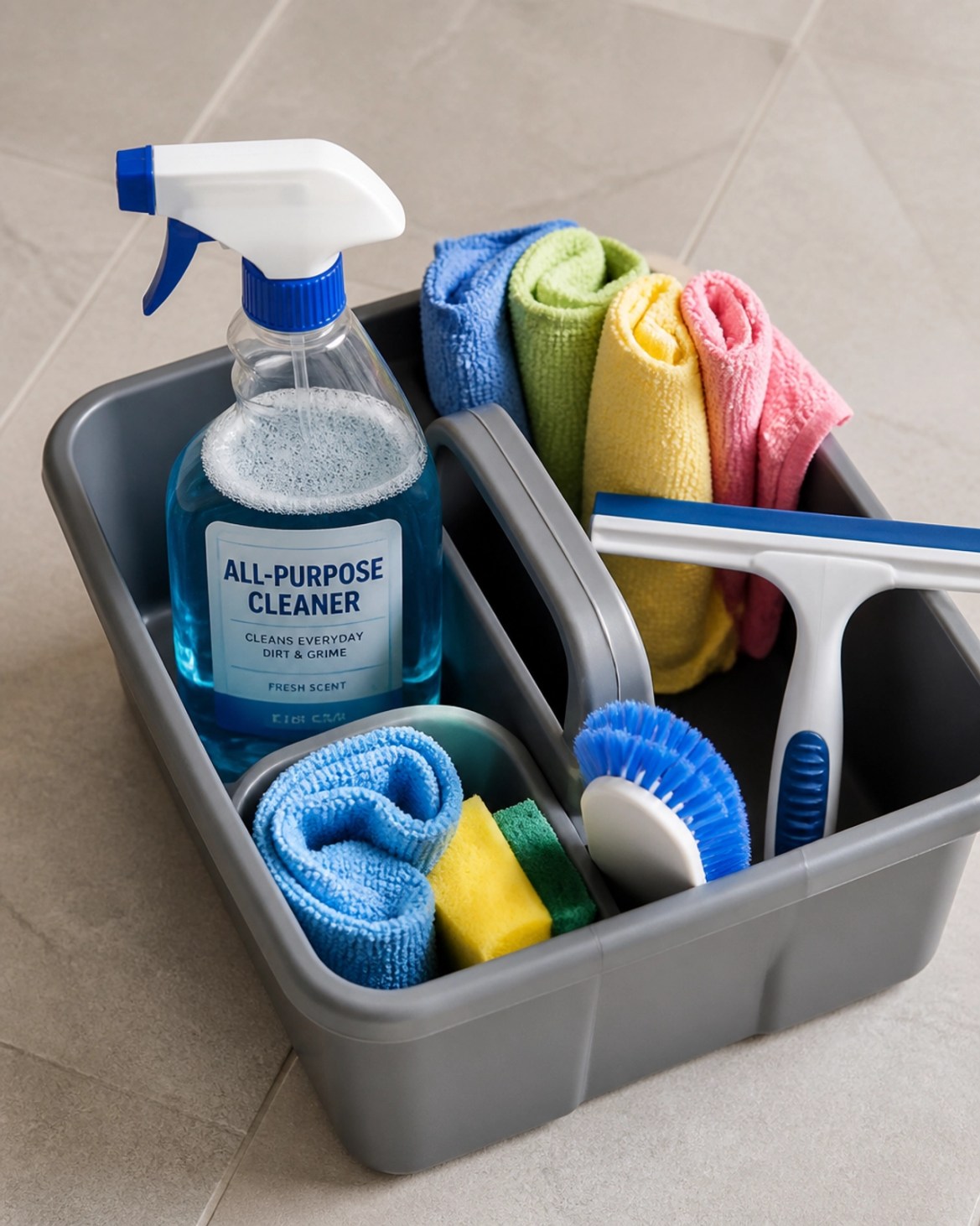
Sponges, mop heads, and vacuum filters are often the dirtiest items in a home. If these tools are not sanitized or replaced regularly, the “cleaning” process is merely a relocation of germs.
The Fix: A Tool Maintenance Routine
A high-performing cleaning schedule must include a “cleaning the cleaners” phase. This doesn’t have to be daily, but it should be a recurring part of the weekly or monthly cycle.
- Microfiber Cloths: Use color-coded cloths for different areas (e.g., blue for glass, red for bathrooms, yellow for kitchens) and wash them in a dedicated load after each use.
- Vacuum Maintenance: Empty canisters after every use and check filters once a month. Rinse reusable filters and allow them to air dry for 24 hours.
- Mops and Buckets: Rinse mop heads thoroughly and hang them to dry so they don’t develop a musty odor.
- Brushes and Sponges: Sanitize sponges in the dishwasher or replace them weekly. Clean hair and debris from broom bristles and vacuum brush rolls.
5. Overlooking High-Touch “Invisible” Zones
Most cleaning routines focus on the obvious: the floors, the countertops, and the toilets. However, some of the most germ-laden areas in a home are almost entirely invisible to the casual eye. Light switches, door handles, cabinet pulls, and remote controls are touched dozens of times a day but are rarely included in a standard weekly checklist.

Ignoring these “high-touch” zones allows bacteria and viruses to linger and spread among family members. Furthermore, dust often accumulates on “hidden” surfaces like the tops of picture frames, the edges of baseboards, and the vents of electronic devices.
The Fix: The “Touch-Point” Checklist
To ensure a healthier home, add a “High-Touch” category to the weekly schedule. This task usually takes less than 10 minutes for the entire house but makes a significant impact on hygiene.
- Daily or Weekly: Wipe down doorknobs, light switches, faucet handles, and appliance buttons with a disinfecting cleaner.
- Bi-Weekly: Clean remote controls, computer keyboards, and shared tablets.
- Monthly: Use a damp cloth to wipe the dust off baseboards and the tops of door casings.
By specifically listing these items on a schedule, they move from “invisible” to “actionable,” preventing the slow buildup of grime that eventually requires a deep, difficult cleaning session.
6. The “Spray and Wipe” Speed Trap
In an effort to finish chores quickly, many people spray a cleaning solution and immediately wipe it away. This is one of the most common mistakes in household cleaning. Most cleaning products, especially disinfectants and heavy-duty degreasers, require “dwell time” to work effectively.

If a disinfectant is wiped away in two seconds, it may not have killed the bacteria it was designed to target. Similarly, if a bathroom cleaner isn’t given time to break down soap scum, the user will have to scrub much harder to achieve the same result.
The Fix: Harnessing the Power of Dwell Time
The fix for this mistake is simply a change in the sequence of tasks. Instead of focusing on one small area at a time, apply the cleaner to several areas first, then perform a secondary task while the product “dwells.”
- Spray the Shower and Toilet: Apply the appropriate cleaners to the bathroom fixtures.
- Clean the Mirror and Sink: While those products sit, wipe down the less-soiled areas like the mirror or the countertop.
- Return and Rinse: By the time the sink is done, the shower cleaner has had 5 to 10 minutes to dissolve mineral deposits, making it easy to rinse away with minimal scrubbing.
This method is “lazy cleaning” in the best sense: letting the chemistry of the products do the heavy lifting so the human does less work.
7. Rigid Perfectionism vs. Realistic Customization
Many people download a generic cleaning schedule from the internet and try to follow it exactly. While these templates are a good starting point, they often fail because they don’t account for the unique realities of a specific home. A household with three dogs and toddlers requires a very different floor-cleaning schedule than a single person living in a carpeted apartment.
When a schedule is too rigid or doesn’t fit the lifestyle, the homeowner inevitably “fails” to keep up. This leads to guilt and, eventually, the abandonment of the schedule altogether.
The Fix: The Household Audit and Flexibility
A successful schedule must be customized. It is helpful to perform a simple “audit” of the home to determine which areas actually need the most attention.
- Assess Traffic Patterns: Which rooms are used the most? The kitchen and the primary bathroom usually need daily attention, while a guest room might only need a quick dust once a month.
- Account for Life Events: If Thursday nights are always busy with extracurricular activities, don’t schedule the “Kitchen Deep Clean” for Thursday. Move it to a lighter day or break it into smaller pieces.
- Build in “Grace Days”: A realistic schedule includes a “catch-up” day (often Sunday) or leaves one day entirely blank. This provides a buffer for when life happens: sickness, late work meetings, or spontaneous social plans.
The goal of a cleaning schedule is to serve the household, not for the household to serve the schedule. If a certain task consistently goes undone, it is a sign that the schedule needs to be adjusted, not that the person has failed.

Conclusion
Creating a functional weekly cleaning schedule is less about the intensity of the effort and more about the strategy of the approach. By avoiding the pitfalls of marathon sessions, working with the laws of gravity, and respecting the necessary dwell time for products, the process becomes significantly more efficient.
Maintenance of tools and a focus on high-touch areas ensure that the home is not just visually tidy but truly hygienic. Most importantly, a schedule must be flexible and tailored to the specific needs of the people living in the home. When these seven common mistakes are corrected, the result is a cleaner, more peaceful environment that supports, rather than drains, the energy of the household.

