
Maintaining an organized home is a continuous process that involves more than just occasional tidying. As household items accumulate, the challenge of finding a dedicated place for everything becomes more pronounced. A lack of storage can lead to cluttered surfaces, which often results in increased stress and a decrease in the functional use of living spaces.
Creative storage solutions are not exclusively for small apartments or minimalist enthusiasts. Every home, regardless of its size, can benefit from maximizing vertical space, utilizing hidden compartments, and repurposing common furniture. By examining each room through the lens of efficiency and accessibility, it is possible to transform a chaotic environment into a streamlined one.
This guide provides over 50 practical and creative examples of how to address storage struggles across every room in the house.
The Entryway and Mudroom
The entryway serves as the transition point between the outside world and the sanctuary of the home. It is often the highest-traffic area and the first place where clutter, such as shoes, mail, and coats, begins to gather.
1. Wall-Mounted Hooks and Peg Rails
Instead of relying on a bulky coat rack that consumes floor space, installing a series of wall-mounted hooks or a long peg rail allows for a more streamlined look. This solution keeps coats, bags, and umbrellas off the floor and easily accessible.
2. Over-the-Door Organizers
The back of the front door or a nearby closet door is often overlooked. Clear pocket organizers can hold more than just shoes; they are ideal for winter accessories like gloves and scarves, or even outgoing mail and reusable shopping bags.
3. Dedicated Family Cubbies
Assigning a specific cubby or locker-style shelf to each family member helps contain individual belongings. This encourages responsibility and ensures that backpacks and sports gear do not migrate into the living room.
4. Built-in Benches with Storage
A bench provides a convenient place to sit while putting on shoes. Choosing a model with a lift-up seat or open cubbies underneath allows for the discreet storage of seasonal gear or pet supplies.
5. Basket “Landing Zones”
Small decorative baskets placed on a console table can serve as a “landing zone” for daily essentials. Designate specific baskets for keys, wallets, and sunglasses to prevent the common frantic search before leaving the house.
6. Slim Rolling Carts
In narrow hallways where traditional furniture won’t fit, a slim rolling cart can offer several tiers of storage for mail, cleaning supplies, or shoes. These can be easily moved when cleaning or rearranged as needs change.
7. Wall-Mounted Baskets
Using vertical space for items that don’t hang well on hooks is essential. Deep wire or wicker baskets mounted directly to the wall can hold hats, dog leashes, and large umbrellas without taking up a single inch of floor space.
The Kitchen: Maximizing Efficiency
The kitchen is arguably the most complex room to organize due to the variety of items: from small spices to heavy appliances. Proper storage and organization in the kitchen can significantly improve the cooking experience and reduce prep time.

8. Pull-Out Spice Racks
Storing spices in a deep cabinet often leads to forgotten jars at the back. A narrow pull-out rack installed next to the stove ensures all spices are visible and within reach during cooking.
9. Vertical Tray Dividers
Baking sheets, muffin tins, and cutting boards are notoriously difficult to stack. Installing vertical dividers in a base cabinet allows these items to stand upright, making it easy to pull one out without disturbing the rest.
10. Deep Drawers for Cookware
Modern kitchen designs often replace lower cabinets with deep drawers. This allows for heavy pots and pans to be accessed from above, eliminating the need to kneel and reach into dark cabinet corners.
11. Corner Lazy Susans
Blind corners are often wasted space. A rotating Lazy Susan tray allows items tucked deep in the corner to be brought to the front with a simple turn, perfect for canned goods or heavy small appliances.
12. Tiered Cabinet Shelving
Standard cabinets often have a large amount of vertical “dead space” between shelves. Adding small, free-standing tiered shelves allows for the stacking of plates, bowls, or mugs without creating precarious towers.
13. Built-in Garbage and Recycling
Integrating waste bins into a pull-out cabinet keeps them out of sight and reduces odors. This also frees up floor space that would otherwise be occupied by bulky trash cans.
14. Appliance Garages
Small appliances like toasters and mixers can clutter countertops. An “appliance garage” with a sliding or tambour door allows these items to remain plugged in and ready for use while staying hidden when not needed.
15. Hanging Pot Racks
If cabinet space is limited, a ceiling-mounted or wall-mounted pot rack can turn cookware into a focal point. This frees up significant cabinet real estate for other pantry items.
16. Pegboard Walls
Inspired by professional kitchens and workshops, a wall-mounted pegboard provides a highly customizable way to hang pots, colanders, and frequently used utensils.
17. Magnetic Knife Strips
Freeing up drawer or counter space (from knife blocks) is easily achieved with a magnetic strip. This also keeps knives sharper for longer as they are not rubbing against other tools.
18. Under-Shelf Baskets
Wire baskets that slide onto existing cabinet shelves provide a “floating” storage area for flat items like napkins, wraps, or small snack bags.
19. Rolling Kitchen Islands
For kitchens lacking permanent counter space, a rolling island provides extra prep room and storage drawers. It can be moved to the center of the room during meal prep and tucked against a wall afterward.
The Living Room: Balancing Comfort and Order
The living room is a space for relaxation, but it often becomes a catch-all for electronics, books, and children’s toys. The goal here is to integrate storage that complements the everyday living aesthetic.
20. Storage Ottomans
A hollow ottoman serves as a footrest, extra seating, and a hidden chest. It is the perfect place to store extra throw blankets or board games that are only used occasionally.
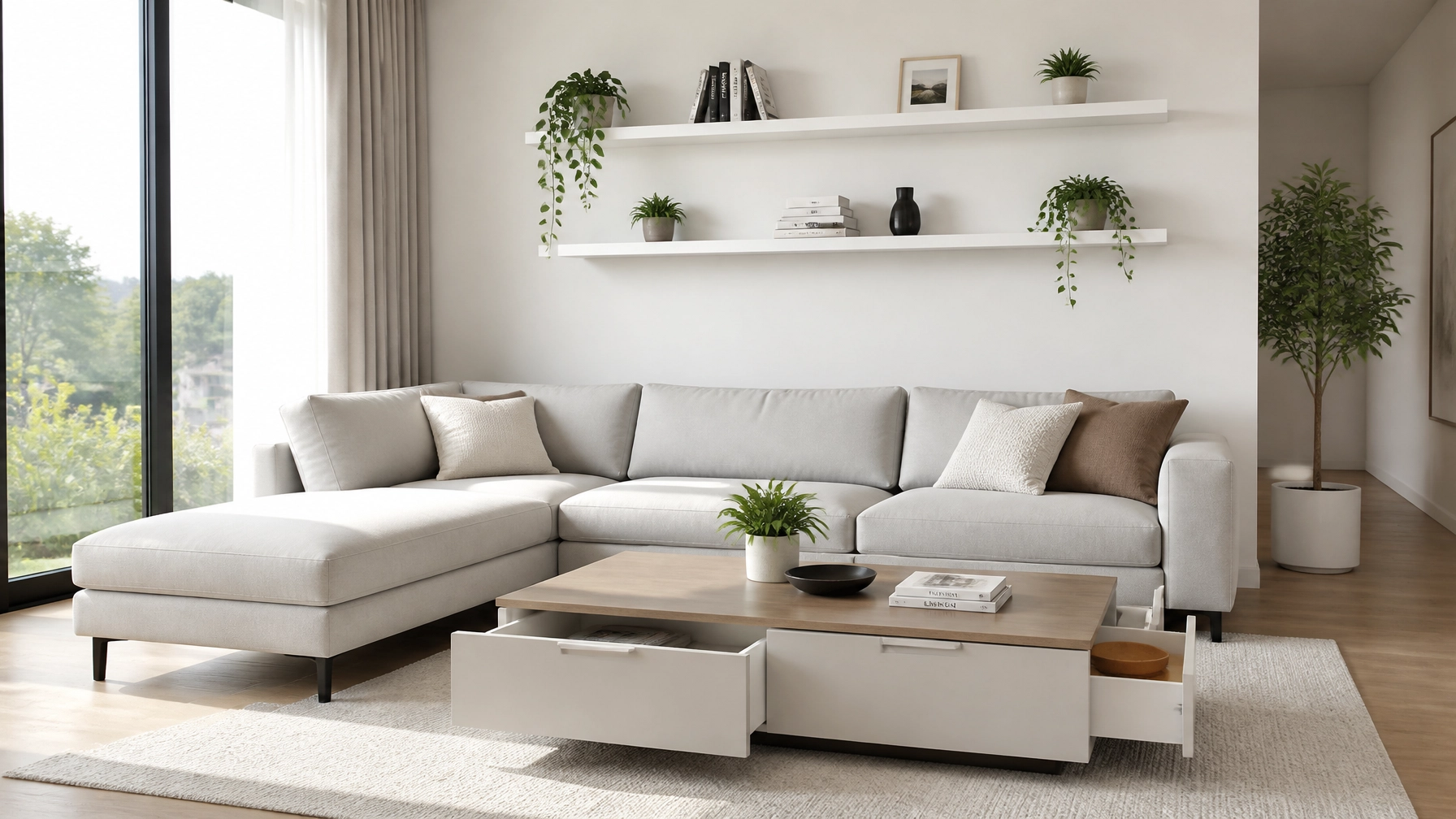
21. Coffee Tables with Lower Shelves
Opting for a coffee table with a lower shelf or built-in drawers provides a place for remote controls, coasters, and magazines, keeping the top surface clear for drinks or decor.
22. Sectional Sofa Armrest Storage
Some modern sectional sofas feature hidden compartments within the armrests. These are ideal for stashing remotes, charging cables, or even a small notebook.
23. Floating Shelves Above the TV
The wall space around and above a television is often underutilized. Floating shelves can hold decorative items or media collections without the bulk of a full entertainment center.
24. Built-in Bookshelves Around Openings
Creating shelving around doorways or windows utilizes wall segments that are otherwise too small for furniture. This “library” look adds character while providing massive amounts of storage for books.
25. Modular Cube Organizers
Cube units are versatile because they can be configured horizontally or vertically. Using fabric bins within the cubes allows for the concealment of clutter while maintaining a clean, uniform appearance.
26. Lidded Baskets
Woven baskets with lids are excellent for hiding miscellaneous items like toy sets or craft supplies. They add a natural texture to the room while keeping the contents invisible.
27. Sofa Console Tables
A narrow table placed behind a sofa can hold lamps and decor while providing a hidden spot for a power strip to charge devices out of sight.
The Bedroom: Creating a Sanctuary
The bedroom should be a place of rest, but visible clutter can interfere with sleep quality. Utilizing the “hidden” areas of the room is key to maintaining a peaceful environment.

28. Under-Bed Storage Drawers
Beds with integrated drawers are highly efficient for storing out-of-season clothing or extra linens. Because they are part of the bed frame, they prevent dust from accumulating under the bed.
29. Low-Profile Plastic Bins
If a bed does not have built-in drawers, long, shallow plastic bins on wheels can serve the same purpose. These are easily tucked away and protected by a bed skirt if desired.
30. Vacuum-Seal Bags
For bulky items like winter comforters or heavy coats, vacuum-seal bags can reduce the volume by up to 75%. These compressed bags can then be easily stored under the bed or on high closet shelves.
31. Daybeds with Trundles
In guest rooms or children’s rooms, a daybed with a trundle provides an extra sleeping surface that completely disappears during the day, maximizing floor space for play or movement.
32. Nightstand Dressers
If space is tight, replacing a small nightstand with a medium-sized dresser provides significantly more drawer space for clothing while still serving as a surface for a lamp and alarm clock.
33. Mirror Jewelry Cabinets
A full-length mirror that opens to reveal a jewelry cabinet is a classic example of dual-purpose furniture. It keeps necklaces from tangling and keeps accessories organized and out of sight.
34. Double Closet Rods
Most closets have a single rod at eye level. Installing a second rod halfway down the wall instantly doubles the hanging space for shirts, skirts, and folded pants.
35. Shelf Dividers
In closets with long open shelves, stacks of clothes often tip over. Acrylic or wire shelf dividers keep stacks of sweaters or jeans neat and upright.
36. Headboard Storage
Some headboards are designed with integrated shelving or side compartments. This is a great alternative to nightstands in very narrow bedrooms.
37. Floating Bedside Shelves
In rooms where even a small nightstand won’t fit, a simple floating shelf can hold a phone and a glass of water without taking up any floor area.
The Bathroom: Maximizing Vertical Space
Bathrooms are frequently the smallest rooms in the house, yet they must store a high volume of toiletries and linens. The secret to bathroom organization is looking upward.

38. Over-the-Toilet Shelving
The space above the toilet tank is often completely unused. Freestanding or wall-mounted units can hold towels, extra toilet paper, and decorative jars for cotton swabs.
39. Floating Vanities
A wall-mounted or floating vanity makes a bathroom feel larger by exposing more of the floor. Many models include deep drawers that are more efficient than traditional cabinets with doors.
40. Tall Linen Towers
A narrow, vertical “tower” cabinet can fit into small corners or between a vanity and a wall, providing several levels of storage for towels and cleaning supplies.
41. Drawer Dividers for Cosmetics
Bathroom drawers can quickly become a jumble of small items. Using clear acrylic dividers allows for the categorization of makeup, skincare, and grooming tools.
42. Hidden Laundry Hampers
If space permits, installing a pull-out hamper within the bathroom cabinetry keeps dirty laundry off the floor and out of sight until laundry day.
43. Ladder-Style Towel Racks
A decorative ladder leaning against the wall provides a place to hang multiple towels to dry without the need for several permanent wall bars.
44. Magnetic Strips for Metal Tools
A small magnetic strip inside a medicine cabinet or on the wall can hold bobby pins, tweezers, and nail clippers, preventing them from getting lost in a drawer.
Home Office and Hobby Spaces
Whether working from home or pursuing a hobby, an organized environment is essential for focus. Storage here should focus on visibility and accessibility.

45. Wall-Mounted Pegboards
A large pegboard above a desk is a transformative storage tool. It can hold everything from scissors and tape to small baskets for pens and charging cables, keeping the desk surface entirely clear for work.
46. Fold-Down Wall Desks
For those who don’t have a dedicated room for an office, a “Murphy desk” can be mounted to the wall. It folds down when needed and closes flat against the wall when the workday is over.
47. Mobile Office Carts
A three-tier rolling cart can hold a printer, paper supplies, and files. This allows the “office” to be moved to wherever the light is best or tucked into a closet when guests arrive.
48. Labeled Document Boxes
Uniform, labeled boxes on a bookshelf create a professional look while hiding the visual clutter of various folders and loose papers.
49. Cord Organizers and Sleeves
The “spaghetti” of cables behind a desk is a major source of visual clutter. Cable sleeves or under-desk trays keep power strips and cords organized and off the floor.
50. Desktop Monitor Stands with Drawers
Raising a monitor to eye level is better for ergonomics, and choosing a stand with a small drawer underneath provides a place for post-it notes and stationery.
Children’s Rooms and Play Areas
Storage in children’s areas needs to be durable, safe, and easy for the children themselves to use.
51. Low-Level Bins
Storing toys in open bins at a child’s height encourages them to help with cleanup. Using bins with pictures or labels helps them understand where each type of toy belongs.
52. Window Seats with Toy Chests
A built-in seat under a window provides a cozy reading nook and a large, deep chest for bulky items like stuffed animals or sports equipment.
53. Corner Stuffed Animal “Hammocks”
Mesh hammocks hung in the corner of a room utilize ceiling-height space to keep plush toys off the bed and floor.
54. Book Rails
Instead of traditional bookshelves where only the spines are visible, thin wall rails allow books to face forward. This makes it easier for young children to find their favorite stories.
Maintaining the Storage System
Implementing creative storage examples is the first step toward a more organized home. However, the long-term success of these systems depends on a few core habits:
- One In, One Out Rule: To prevent the return of clutter, consider removing an old item whenever a new one is brought into the house.
- Seasonal Audits: Every six months, go through stored items (especially in closets and kitchens) and donate or discard things that haven’t been used.
- Label Everything: Labels are not just for aesthetics; they help every member of the household know exactly where items should be returned.
- Utilize Vertical Space: When in doubt, look up. Walls are the most underused storage resource in most homes.
By thoughtfully applying these storage solutions, it is possible to reclaim living space and create a home environment that feels both functional and restorative.

